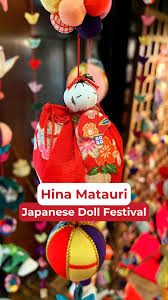
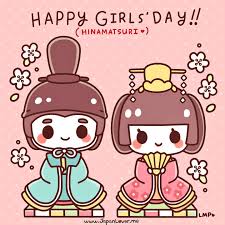
Japan is a rich culture of celebrating its traditions and wishing for the best features for its youth, investing in their futures. I have had the delight of highlighting some of the holidays on GeekyKool here, but I have another:
Today is Hinamatsuri, known as ‘Girls’ Day’ OR ‘The Doll Festival.’
There is some dispute on its original origin, but it has been at least celebrated for over a thousand years in Japan. Some studies claim it is based on a Chinese holiday, dating back to the 3rd century; Japan’s version was one of the five seasonal holidays. Illnesses stole the lives of many, including children. Families would make paper or straw dolls to float them down rivers to get rid of the bad luck and ailments, so the children could live. In the Edo period (1600s to mid-18oos), the dolls displayed became the Hinas shared, based on the Emperor and his court.
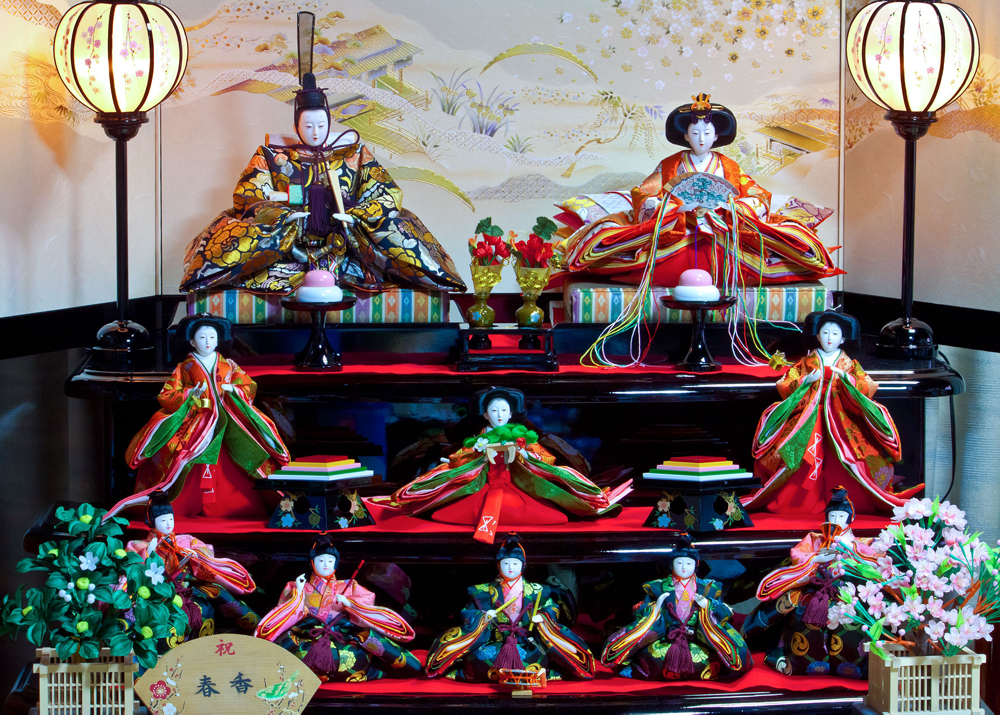
The aforementioned dolls, known as hina-ningya/hina dolls, are displayed at homes with young girls with a prayer of good luck and hope of a happy marriage for them in the future. The imperial family, in their wedding garb, get set up to greet starting on the first day of spring to the middle of March. Every display has the emperor and empress for sure, but there are seven steps, hina-dan, each draped in red, that go by ranking of the family and the doll’s court that can be filled:
- Top Tier: Emperor and Empress
- Second Tier: Three ladies-in-waiting serving sake to the couple
- Third Tier: Five court musicians with: small drums, large drums, a hand drum, a flute, and a singer with a fan
- Fourth Tier: Two ministers/bodyguards (one old, one young) on either side of a mochi (rice cakes)
- Fifth Tier: Three servants (one crying, one angry, one laughing) between orange and peach blossom trees
- Sixth Tier: Furnishings (Such as a bridal chest, sewing box, mirror, screens, lanterns, and more)
- Seventh Tier: Traveling items, like an ox-drawn carriage or a palaquin.
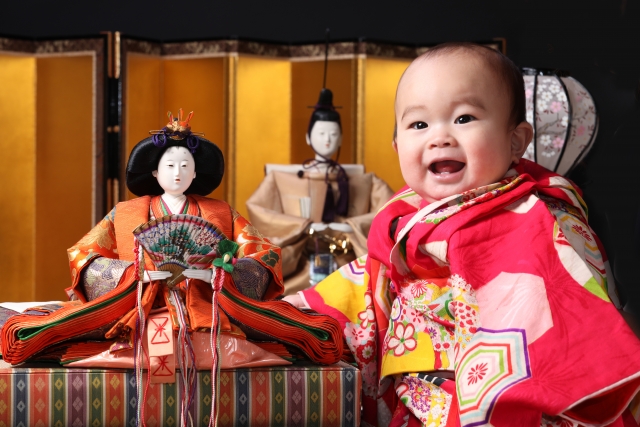
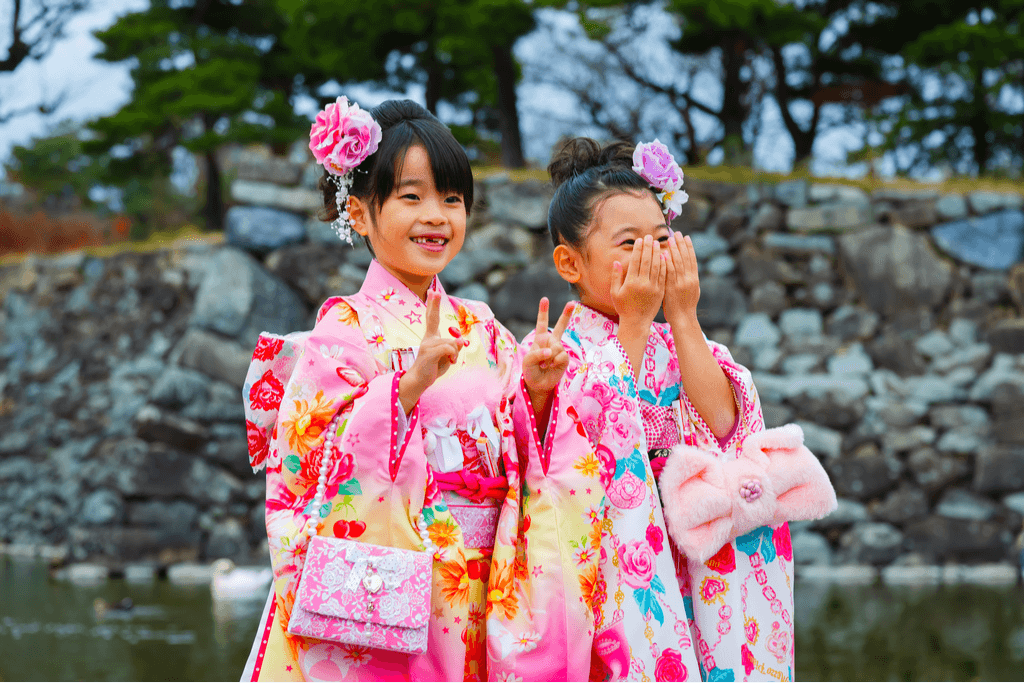
A girl’s very first Hinamatsuri is precious and special. Even one-year-old girls get to wear a kimono. Their hina dolls are presented. Grandparents are usually the ones who present newborn granddaughters with their own doll set. However, they are expensive, so it is not uncommon for a daughter to be given her mother’s set, making them heirlooms passed down through generations.
Homes can also be decorated in momos (peach blossoms), which start to bud in early spring around the same time. In fact, March 3rd is not only Hinamatsuri, but also Momo-no Sekku/Peach Blossom Day.
And of course, celebration goes beyond the home.
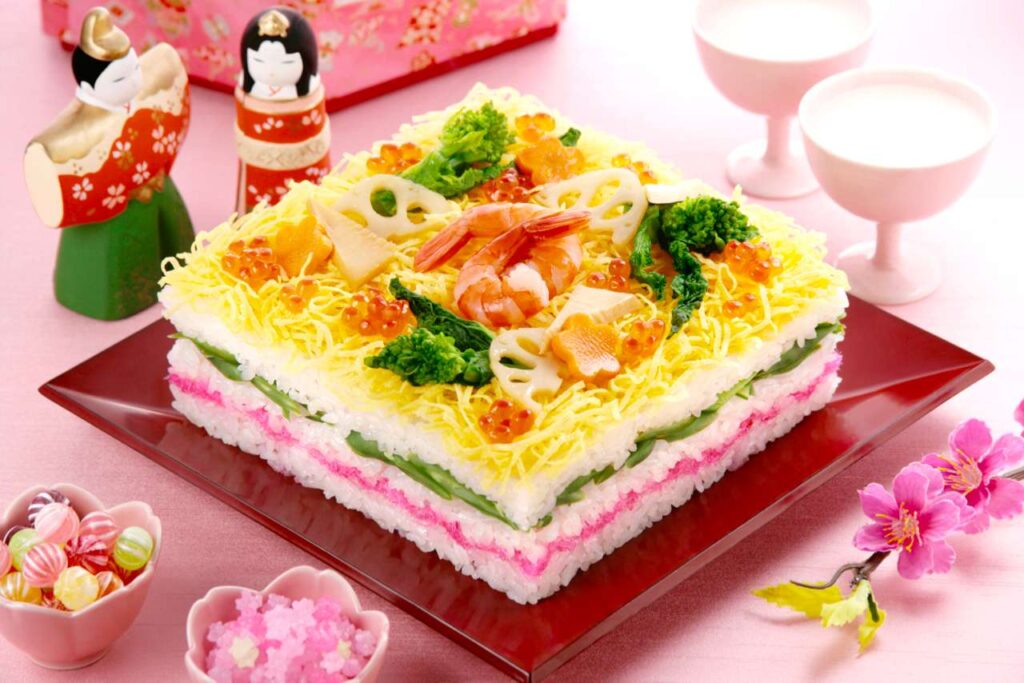
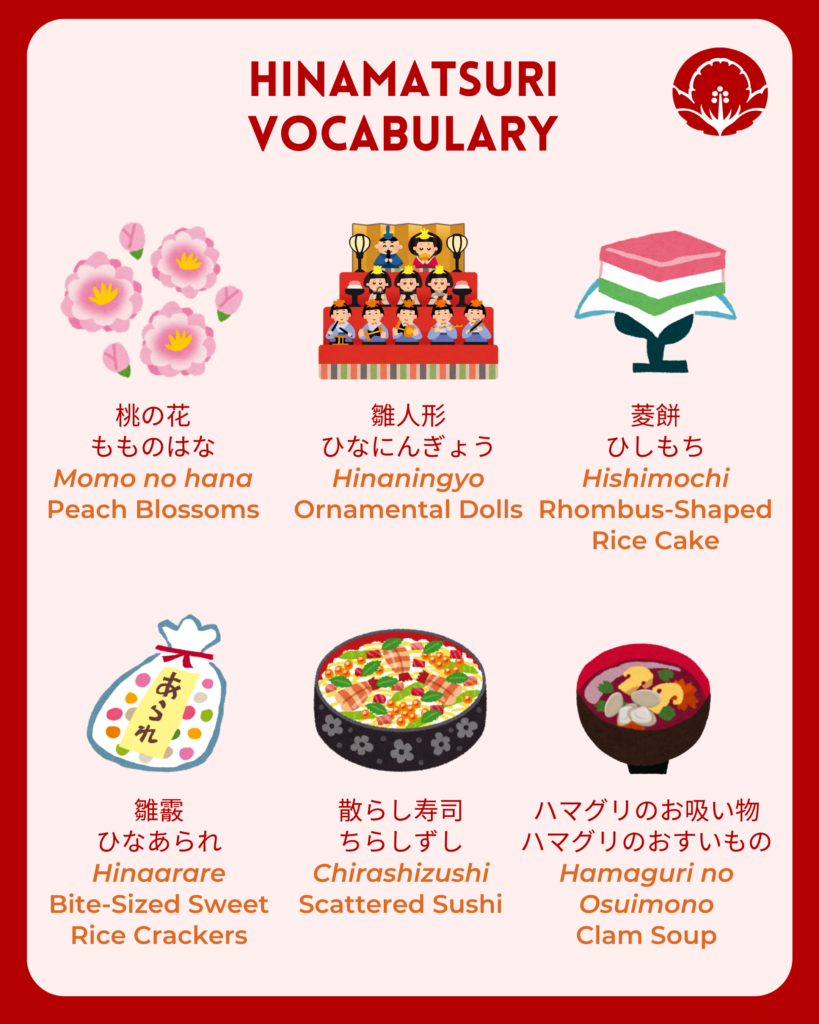
What is better than festival foods? They go from savory, like Chirashizushi (scattered sushi) and Ushio-jiru (clear clam soup), to amazake (sweet white non-alcoholic sake for kids, but there is a regular sake for adults, too) and confections, Hina-arare (bite-sized, colorful rice treat), and the beautiful looking Hishi-mochi (a three-layered square mochi, sweet sticky rice where each color with a meaning: pink for chasing away evil spirits, white for purity, and green for health.) I definitely would try that one!
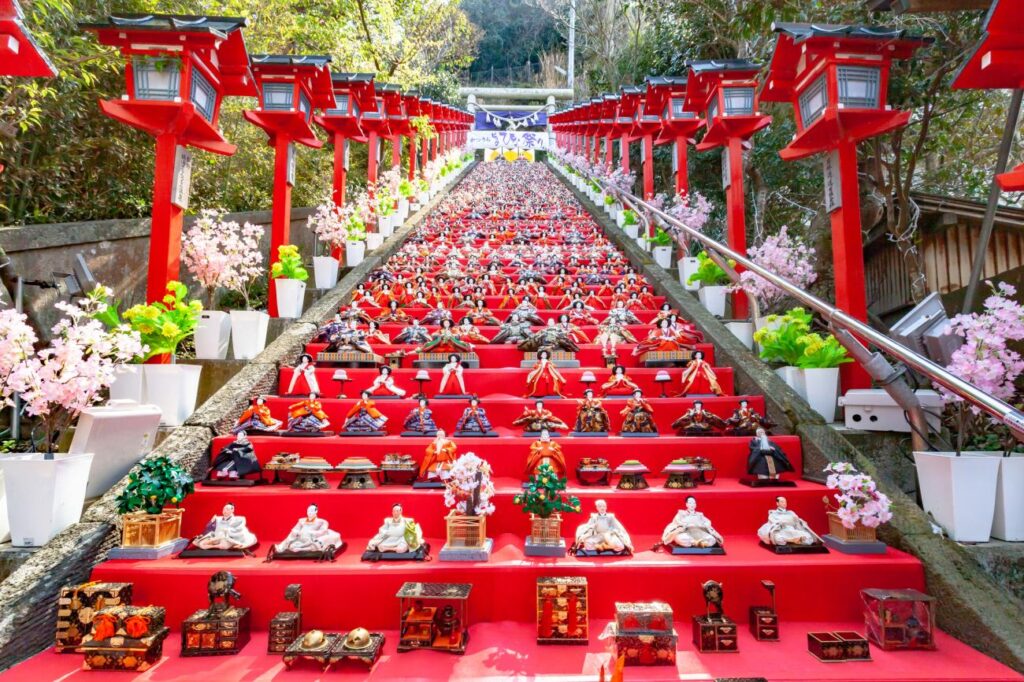
There are also special locations that take the grandeur of the doll festival to new heights. Shrines host celebrations with dolls, hanging ornaments, food, and more. Some shrines even truly make Girls’ Day shine. The town of Katsuura has over 30,000 dolls on display! The Ohina-sama Water Parade has children dress as Hina dolls, waving on beautifully decorated boats. The Setogura Museum has a giant Hina doll pyramid made of over one-thousand dolls, and more clay Hina dolls all throughout the town. Even town centers set up online/virtual celebrations now!
Whether you spend time with family with paper and silk decorations, as girls cherish dolls passed down through generations, or visit a shrine for your doll and festive fixes, the resounding heart of the holiday rings true. Hope. Joy. Protection. For our next generation of women.
RESOURCES:
KonMari: A Guide to Hina-Matsuri