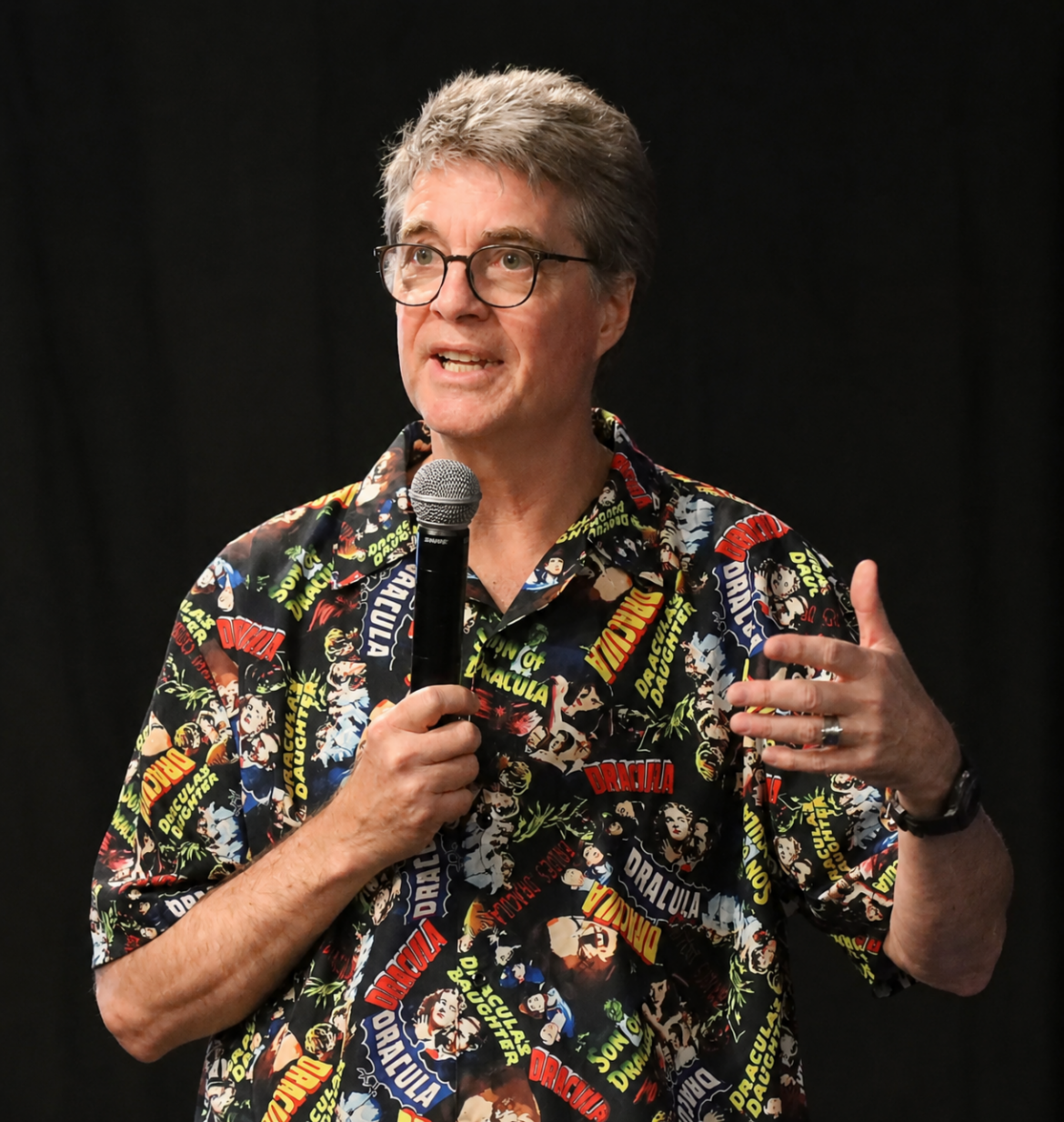
Last year on October 4, 2025, Dacre Stoker, the Great Grand Nephew of Dracula Author, Bram Stoker came to Richmond, Virginia to give a presentation on Dracula and Vampires as a genre. At the time he agreed to an interview with GeekyKool.com. He has been very busy doing tours back in Romania and other things. We finally reconnected earlier this month, so without further gilding of the lily, Here is my interview with Dacre Stoker.
1. Introduce yourself to the Audience.
I am the great-grandnephew of Dracula author Bram Stoker and a leading authority on the life, research, and legacy of the creator of the world’s most famous vampire. As an international and New York Times bestselling author, I co-authored Dracula the Un-Dead (2009) and Dracul (2018), both inspired by my families history and Bram’s unpublished notes.
My other publications include The Lost Journal of Bram Stoker: The Dublin Years (2012), Stoker on Stoker: Dracula Revealed (2022), and Dracula Annotated: The 125th Anniversary Edition (2022), which restored significant material removed from Bram’s original manuscript.
2. What was it like training for the Modern Pentathlon?
Training for Modern Pentathlon was pretty intense because you weren’t training for one sport, you were training for five: running, swimming, shooting, fencing and horseback riding. Each requires a completely different skill set, so you’re constantly juggling your training schedule.
I competed internationally for Canada and spent about twelve years involved in the sport as an athlete and coach. What I loved about pentathlon was that you had to be incredibly versatile. You might have a great swim or fencing competition, but then you had to forget about it and focus on the next event. It taught me discipline, adaptability and how to perform under pressure, qualities that have actually served me very well in everything I’ve done since.
3. What was it like coaching the Canadian team at the 1988 Olympics in Seoul?
Coaching the Canadian Mens team at the Seoul Olympics in 1988 was one of the great experiences of my life. As an athlete, you’re primarily responsible for your own performance. As a coach, suddenly you’re responsible for helping other athletes perform at their best on the biggest stage in sport. This was the biggest stage for us. The Olympics also have an atmosphere that is difficult to describe until you’ve experienced it. You’re surrounded by the finest athletes and coaches in the world, all of whom have spent years preparing for that moment. Representing Canada in that environment was something I was extremely proud of. It also taught me a lot about preparation and teamwork. Once the competition begins, things inevitably happen that you didn’t anticipate, and you have to adapt very quickly.
4. When did you start to actually read up on your great-granduncle Bram Stoker?
Interestingly, growing up as a Stoker didn’t mean that I was automatically a Bram Stoker scholar. Like most people, I knew Dracula, and of course I knew about the family connection, but my serious interest in Bram developed much later. It all started in 2005 when I was approached to contribute a lot of personal information about Bram for a novel. I realized then that if I was going to be a family resource about my famous relative I better know what I was talking about. For more than two decades now, I’ve been researching not simply Dracula, but Bram himself, his family, his education in Dublin, his career with Henry Irving at the Lyceum Theatre, his travels and, particularly, the extraordinary amount of research that went into writing Dracula, and his other novels and short stories.
The deeper I went, the more fascinating Bram became to me. Eventually I realized that being a member of the family gave me an opportunity, and perhaps a responsibility to help tell Bram’s story as accurately as possible.
5. What made you want to do tours in Romania and other places where Bram lived?
The tours really grew naturally out of my research. I realized there is something completely different about actually standing in the places connected with Bram and Dracula. I’ve taken groups to Transylvania, and also to Dublin, Whitby and Cruden Bay in Scotland. In Dublin, you can explore where Bram grew up, went to Trinity College and worked at Dublin Castle. In Whitby, you can follow the footsteps of his 1890 visit and see the places and research that fed directly into Dracula. In Cruden Bay, you can experience the landscape where Bram spent his summer holidays and where he did so much of his writing.And then Romania allows us to explore the other side of the story, the history, landscape and folklore of Transylvania and, of course, the historical Vlad Dracula lll. For me, the tours turn literary history into something tangible. You’re no longer simply reading about Dracula, you’re walking through the world that helped create it.
6. You have written a lot of books related to Bram’s original novel. Which was your favorite, and is there an order people should read them?
I’ve been fortunate because each book has allowed me to explore Bram and Dracula from a different direction. Dracula the Un-Dead, which I wrote with Ian Holt, allowed me to continue the Dracula story. Dracul, written with J.D. Barker, took us back into Bram’s life and family history and imagined the events that might have led him to write Dracula.
The Lost Journal of Bram Stoker allowed us to hear Bram in his own voice as a young man in Dublin, while Stoker on Stoker gave me the opportunity to bring together years of research into Bram’s life and the creation of the novel. And then Dracula Annotated allowed Robert Eighteen-Bisang and me to restore and examine material removed from Bram’s original typescript.
As for reading order, I’d actually start with the prequel Dracul, then read the annotated Dracula, then the sequel Dracula the Un Dead. I think that the non fiction books become much richer once you have read the fictional ones.
7. Tell us about “The StokerVerse.”
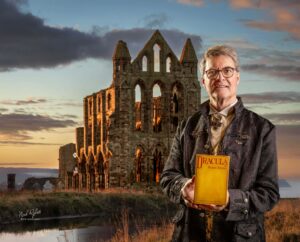
The StokerVerse, a collaboration between myself and Chris McAuley, is really our way of keeping Bram’s creative legacy alive while introducing his work to new generations and new audiences. Most people know Bram because of Dracula, but he wrote so much more, novels, novellas and some wonderfully strange and imaginative short stories. The StokerVerse gives us an opportunity to revisit those stories and characters, as well as the world of Dracula, and then take them in completely new directions. Some of our stories have remain closely connected to Bram’s original work, while others might reimagine his themes in alternative worlds, a steampunk setting, the future, or even another dimension.
What makes it especially exciting is that we’re not limiting ourselves to traditional books. We want to tell these stories through the media that people enjoy today, comics, novels, audio dramas, interactive stories, card and board games, and eventually video games. The idea is not to replace Bram’s work. It’s to use his extraordinary imagination as a starting point and ask: Where might Bram’s stories take us next?
8. You just created Stoker Wines. Why was it important to use Romanian vineyards?
Putting the Stoker name on a Stoker/ Dracula-inspired wine made in Romania, and, importantly, using Romanian-grown grapes, gives the project a sense of authenticity that we simply couldn’t achieve by licensing the name to an unrelated wine producer somewhere else. Romania isn’t just a marketing connection to Dracula. Its history, landscape, folklore and, of course, its associations with Transylvania are now an integral part of the worldwide Dracula story. So, for us, producing Stoker Wines in Romania just felt right.
Our vineyard is located in Ceptura, in the Dealu Mare wine region, not far from Bucharest. We’re now undertaking a major renovation of an 80-year-old facility there, which we plan to transform into a visitor and wine-
tasting center. Ultimately, we want Stoker Wines to be more than something you simply buy. We want people to come to Romania, visit us, taste the wines and experience another part of the extraordinary world and stories surrounding Bram Stoker and Dracula.
9. Favorite all-time movie performance of Dracula and why?
It is so hard to narrow down my list to just one, so I am going to give you three, each of them really defined the era in which they were created:
Dracula 1931 Universal Studios with Bela Lugosi
Dracula 1958 Hammer Studios with Christopher Lee
Bram Stoker’s Dracula 1992 Columbia Pictures with Gary Oldman
10. How can people find you on social media?
I’m pretty easy to find, just search for Dacre Stoker. On Facebook and Instagram I am Dacre Stoker Author, I post quite a bit about Bram, Dracula, my travels, tours, research, upcoming appearances and some of the new projects we’re working on. I really enjoy hearing from people who share this fascination with Bram and the extraordinary world that grew out of Dracula. Dacre also has a website HTTP://DacreStoker.com
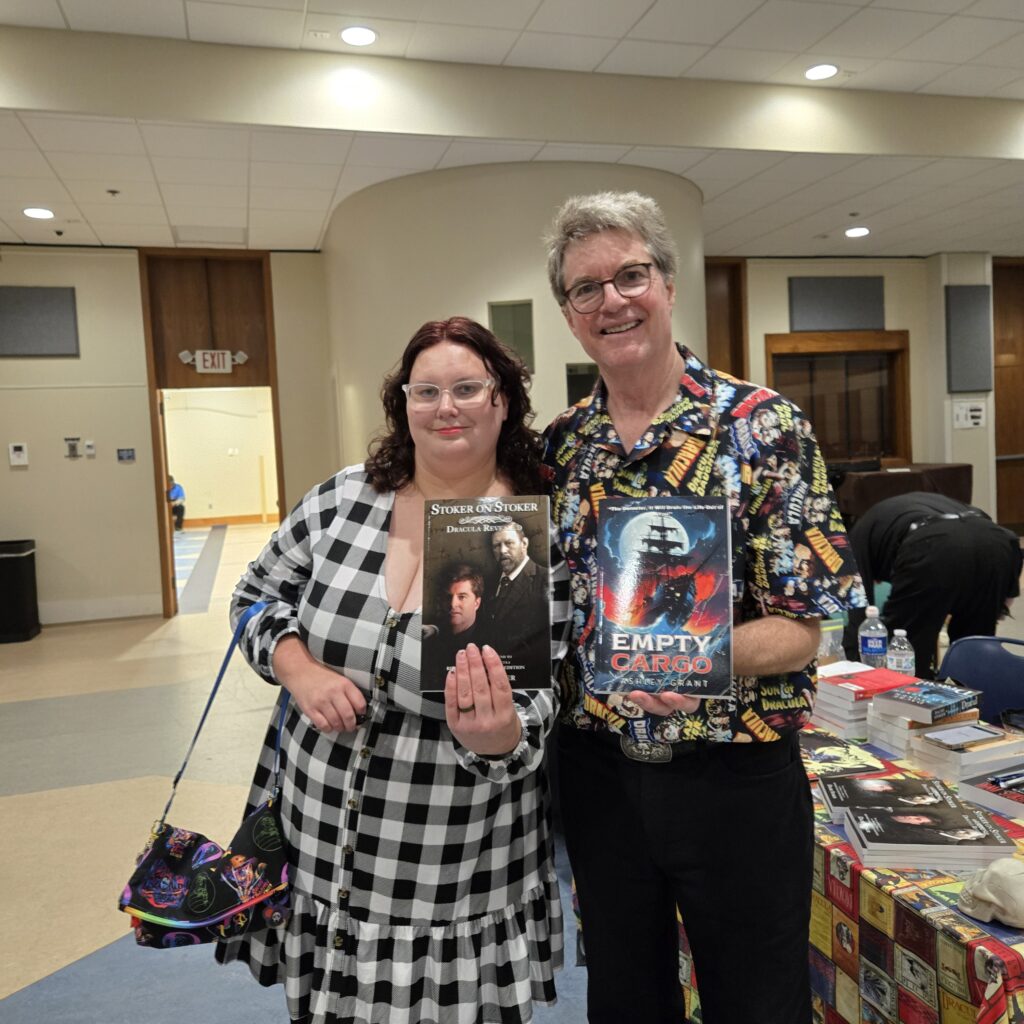
If you every get to go watch his presentation on Dracula or take a tour in one of the Nations that Bram Stoker lived, or even take a Course with him in South Carolina where he lives, I definitely recommend doing it. He is an amazing author and someone I am glad to have met and call him “My Friend”