
Hello, my flowers and fighters, counts and ladies. I have been working on this post for months with not only absorbing and reading the multitude of materials in several medias, but researching for this article as well. I hope my passion shows; my last post before I turn 37. It would be music to my heart if you read it, commented, and shared. ^_^
“The Rose of Versailles” Spotlight:
Story overall (manga volume one blurb:)
“Oscar François de Jarjeyes is a young nobleman raised as a son by her father. As commander of Marie Antoinette’s palace guard, Oscar is brought face-to-face with the luxury of King Louis XVI’s court at Versailles. Joined by her servant André, Oscar is privy to the intrigue and deceit of France’s last great royal regime.”
************
Manga:
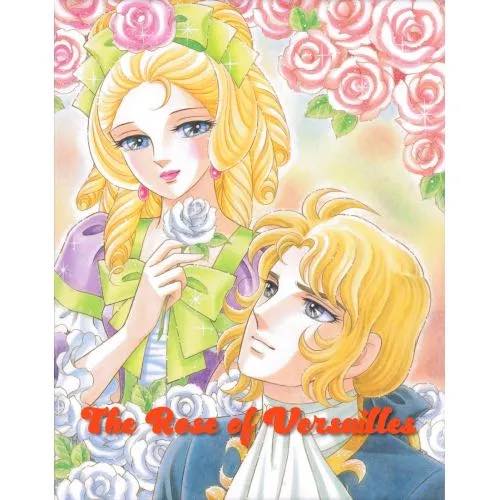
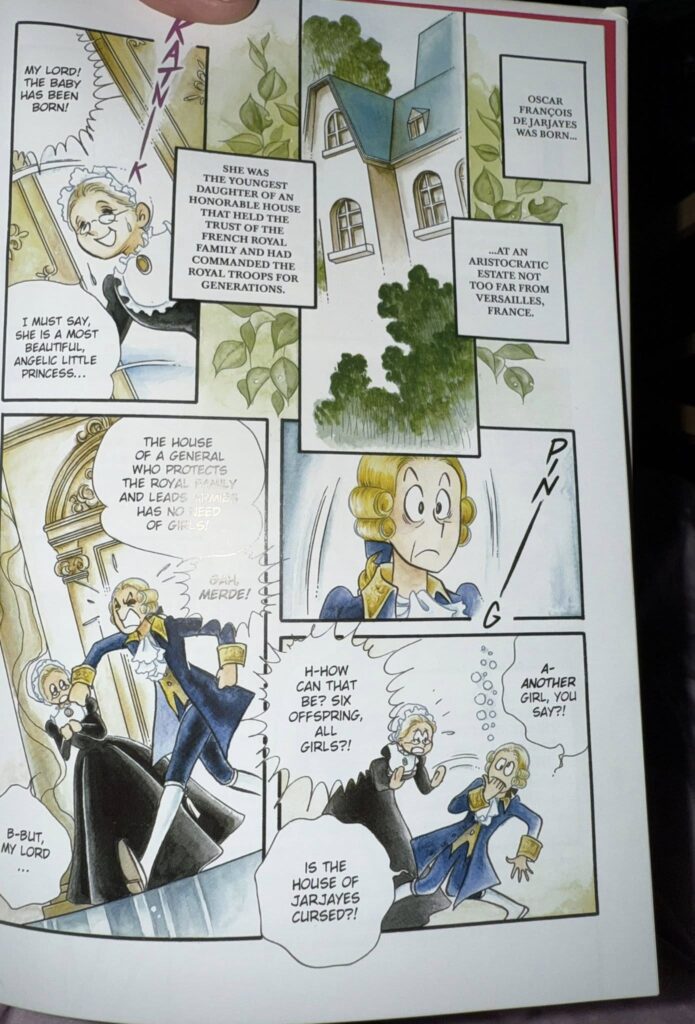
If I am going to discuss all the medias of this tale, then I must start with the beginning. Creator of fantastic mangas with series spanning over five decades, Riyoko Ikeda became one of the leading shojo (manga aimed at girls) authors and even helped revolutionize the genre with elegance for adolescent readers, whereas before this, the genre was more for tweens.
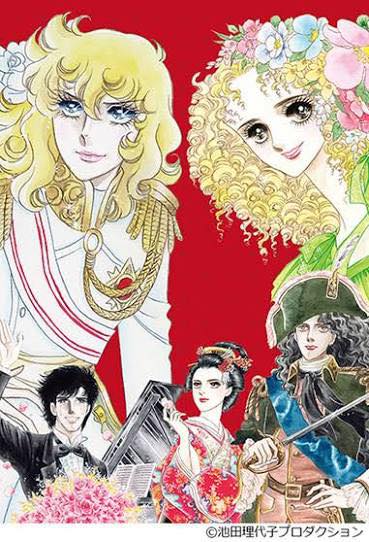
And this is her most well-known work.
“The Rose of Versailles” was released in 1972 and concluded just a year later in 1973, impressive with it being over eighty chapters (or 14 volumes originally.) A 53-year-old work, this story is regarded for its empowering female in Oscar while not shying away from the severity of its historical topic, The French Revolution.
But some major respect needs to be given to Miss Ikeda! Like Oscar, thrown into an elitist male-dominated world, our beloved author and artist had to fight and convince her father to go to college in the late 1960s, working on a degree in philosophy. However, soon, she got involved in activism and decided to go against the wishes of her parents and funded her studies through waitressing, factory work, and door-to-door sales. This passion to fight for a better world and work hard was rooted into our Lady Oscar, who (mild spoiler) seeing the upheaval of the poor citizens of her cherished France around her after being raised and around nobility most of her life, is not afraid to risk so much and change her ideals in order to do what is right; help the people.

Miss Ikeda, at 24, got paid for a comic strip she said she scribbled to pay her rent. Soon, her ‘doodles’ became popular, and she was prepared to serialize “The Rose of Versailles.” Here, she fought for herself once more. The magazine, which was run by an all-male staff, was worried its audience would not understand a historical work. But, she stood her ground and her work, declaring if it was not a success, she would resign! She was a real noble guard in dear Japan.
And, of course, it was a massive success! In its first two years, it sold 13 million copies, making it the FIRST commercial success in shojo manga and making the printing of chapters into paperback novels a business model!

The initial plan for this manga was to focus on the life of Marie Antoinette, the beautiful, charming, and slightly cheeky daughter of the empress of Austria. At 14, she travels to France to marry the king’s grandson, the heir to the throne, making the jewel Marie the future queen. Miss Ikeda read biographies of the fated, tragic ruler, her studies making the manga magazine staff a little more convinced it was historically accurate for a historical-fiction piece. I personally loved that the first chapters of the manga focused on Marie as a child, and you see her with her empress mother, her sisters, and her tutors, getting a real sense of her little pixie beauty and persona that carries over to her highlighted flaws and glamour as a monarch. Plus, they were entertaining. In the four medias I absorbed, this is the only one I got to experience this arc.

I feel part of it was the shift in who the story followed. At the start, the manga was supposed to be about the princess/queen of France and her life before and during the French Revolution, with Oscar being a supporting character, be it a key one. However, Oscar was so popular, the majority of the POV moved to our hauntingly enchanting and complex Lady Guard.
How the manga starts and ends with the same paragraph is impactful, and as an author, I found a fitting and gripping touch. It states how our main three: Oscar, Hans von Axel, and Marie Anionette were all born in 1755 and how their fates were unexpectedly wined. intertwined.

Several of the events were true in French history, even if they were embellished.
Many of the nobles and revolutionaries were real people, and you can tell from the portraits and mini-bios the manga-ka adds in the manga that research was lovingly done for them, especially in the final volume of the main plot, where the monarchy was dissolved. There were so many of them, but much appreciation for the lessons and for showing these figures with respect.
This includes, of course, the King and Queen with Marie Antoinette and King Louis the 16th and their children. Although Sophie, their second daughter, is never mentioned or shown.
- King Louis the 15th (and the panels of watching him deteriorate from smallpox were absolute, nightmare fuel!)
- His mistress, Madame du Barry (it was clear the princess did not like her and her lifestyle, although the dramatics of the social snubbing in the manga/anime were deeply embellished.)
- Duke of Orleans- The brother of the king who tries to take the throne,
- “Countess” Jeanne de Valois-Saint Remy-Motte and her involvement in The Necklace Affair,
- Her husband, Nicolas de La Motte,
- Cardinal Rohan,
- Nicole Leguay d’Oliva- the poor commoner girl who looked like Marie Antoinette, whom Countess Jeanne used to further Trick Cardinal Rohan to give her money with fake correspondence with the Queen whom he loved during the necklace affair.
- Duchess de Polignac- The favorite female friend of Marie Antoinette. She and her family were showered with titles, wealth, and special treatments, to the ire of the nobility. Their friendship was used to fuel the hatred for the queen, and it was rumored that the two women were secretly a couple. She was the governess to the King and Queen‘s children for a while as well.
-
Henri de Guéméné- a Noble, who in the manga is beyond cruel,
-
General Bouillé- a French general,
-
Colonel d’Agoult, the second in command with Oscar, takes control of the French National Guard.
-
–Maximilien Robespierre- the eloquent leader of the beginning of the French Revolution,
-
Louis Antoine de Saint-Just- although they did not appear in the manga until the last volume or so, also known as the archangel of terror, they became the president of the French National Convention despite their young age and rumored pretty face,
- And of course, numerous other key French Revolution figures and the timeline in the last volume of the events after the Bastille is incredibly detailed. Bravo!
- Also, a young Napoleon Bonaparte, who is a soldier in the Revolution, bumped into our Lady Oscar, and they have a couple of pages together where Oscar sees potential greatness in him. It is said that about 10 years later, Napoleon became the star of his own manga by our wonderful manga-ka here. Unfortunately, it is not in English. 🙁
We also, of course, cannot forget our other two impactful supporting characters:

-
Rosalie Lamorlière (on the left; Jeanne on the left-) in real life, the girl was a commoner and best known for what happened at the end of the manga: being the servant to an imprisoned Marie Antoinette until the end of her days. In the manga, she gets adopted into Oscar‘s family essentially, but finds out she had a nobility mother who gave her to the mother she grew up with after a scandal. She also falls deeply in love with her rescuer, Oscar. This flower does get training for she wants to seek revenge for what happened to the mother who raised her. And Rosealie has a connection to the fake Countess Jeanne. Later, she gets involved with the French Revolution with a man she falls in love with. She tends to pop in and out of the story at different times; her role, as Oscar says, “to being her spring breeze.” Rosealie is the innocent and pure-hearted character that everybody wants to take care of. There’s much more plot in the fictional world than what is known about her in real life.

-
Hans Axel von Fersen– our dashing and charming Swedish count, military leader, ambassador, and the real-life love interest of Queen Marie Antoinette, and the fictional crush for a little bit of Oscar. His devotion to the French royal family and his beloved is profound, and the most fleshed out in the manga. After the capture of the Bastille, he almost goes mad and tries to get to his imprisoned lover and her children, thinking of escape plans and risking his life, and everything he owns in order to raise armies to help them escape (just some samples to his devotion). His fate, which is described in the last two pages of the manga, happened to him in real life and is beyond cruel. president of the French National Convention, despite their supposed pretty looks and young age, president of the French National Convention, despite their supposed pretty looks and young age, president of the French National Convention, despite their supposed pretty looks and young age.

All of these are such impressive and inspiring feats to be certain. But a motivational female lead and captivating historical storytelling are not the only draws. The complexity of the characters is wrenching and has you turning the pages, hungry for more aristocratic drama that would annoy you in real life. Our Lady Oscar has accepted her role as her father’s heir and to be trained and live as a man. Society either fully accepts her in the male role, with her slew of fangirls gushing over the dashing royal guard leader, or is disrespectful to her because of her female gender, even though she can kick their butts in horseback riding, sword combat, and gunmanship. Not too many people see her just as Oscar the person, and that makes her go through a multiplex of self-discovery, from her loyalty, goals in her life, and thoughts of marriage and love. You feel for Oscar the soldier, Oscar the daughter, Oscar the friend, Oscar the justice fighter, Oscar the protector, and Oscar the maiden.
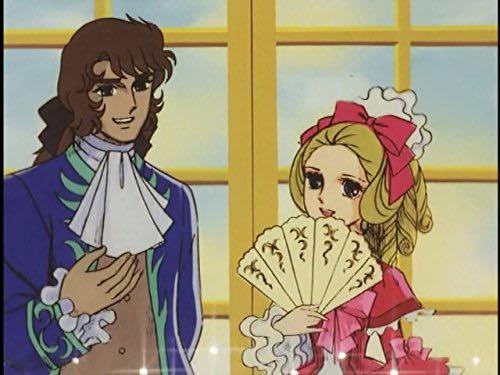
Yet, deep down, this is a love story at its heart. The forbidden romance of Queen Marie Antoinette and her dear Count Han Axel von Fersen was a true, bittersweet, ill-fated love. I was delighted by the depths of their pure affections and the lengths they went for each other, with the gravity of her position, the responsibility of producing an heir, and helping to oversee France. I mentioned that a little in his description, and even though you know they are doomed from the start, their surprisingly numerous scenes are touching and make you ache.
But the true love we secretly root for and melt inside when it comes into our lives is Lady Oscar and Andre, her servant and companion since childhood.
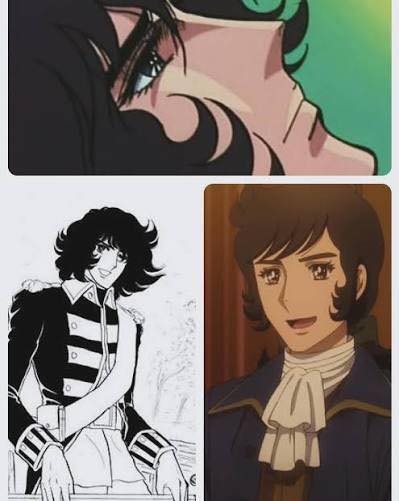
Andre (a fictional character) is the grandson of Oscar’s nanny, coming to live with them after his parents died when he was seven. He is infatuated and proud of the life she has agreed to as a son of a great noble line. But, of course, he sees her as a radiant soul, inside and out, forever loyal, thriving to be her shadow so she can shine. Over time, and after Oscar offers her life for his master when he is faulted for the princess, Marie, is hurt when riding a horse, he swears to give his life for her one day. (As a note: he is the stable boy at the palace at the time as Oscar guards the young princess.) He is more than a commoner with the richness of his devoted love, protecting her, and doing whatever she asks; he realizes how hard it is to see other men interested in his companion, even though he knows, with his station, he can never truly have her, marry her.
Now, one thing about the anime being my first representation of this groundbreaking story is that Andre there can still hold his own and has this confident, but warm swagger naturally about him. The rest of the medias start with him being too whiny and a crybaby. Then, when he declared he would die for Lady Oscar after she saved his life, I was afraid he was simply trying to be a martyr run by guilt or social class obligations. What was the point of her saving him then, unless it was an act of protection in a real dire situation? But, luckily, my fears were doused. His feelings for her were true and breathtakingly portrayed in soft, lovely little scenes between her possible forced engagement and when Oscar switches how she is seeing these rebellions of the French people. It felt raw, natural, and like a haunting melody from Oscar’s violin that you can get lost in.
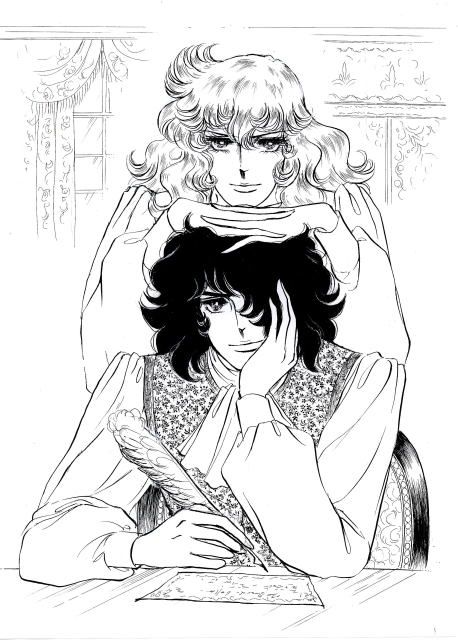
Now, you are probably glaring at me through your screen with your psychic powers, cheeks ablaze that I am spoiling a couple! Hear me out before you cast a stone! These two have been immortalized for their almost tragic Greek myths level of romance story, so not finding spoilers they DEEPLY like each other online with the tiniest of research would be near impossible. But, I will not ruin the discovery of their precious moments, their conversations, IF they even get officially TOGETHER, and their fate. But there is a reason they are so regarded and cherished in almost an ethereal way to this day. They even have a statue of the two of them!
ON ANOTHER FUN NOTE, BUT PG-14 CONTENT, SO BE WARNED: This is the first manga to even show a man and woman getting physically intimate with each other. It is very tastefully done and you do not see much, but enough that the reader knows what is conspiring. I will admit, the Netflix movie quoted some of this scene from the manga directly, and it was well done.

One of my favorite surprise components of the manga was the humor. I was not expecting the traditional anime sweatdrops and large eyes when there was a comedic moment, but it worked great, giving me a genuine chuckle several times. Definitely reminiscent of the time, like Lupin III (although he has way more of a goof persona). I loved it all!
We cannot go without sharing the artwork, 50% that makes a manga a manga. The overly large, sparkly eyes that blind you are a landmark, and I admit, sometimes they are stunning, sometimes a little creepy. But still, it makes the world of jewels and emotion of the Queen of France and her mighty guard shine through. Another eye detail is that sometimes, the manga-ka would omit the irises and pupils altogether, making the white eye sockets scary. When it is used for the occasional dramatic effect or background characters, I see nothing wrong with saving time. But it was too often front and center in major scenes and glaringly large with a main character. It made it look like a horror film.

The details of the palace and attire are marvelous and pop out against the crisp, often white, rhomboid-shaped backgrounds. From all the tiny details in clothes and jewels that shimmer to the decrypted buildings withering away like their hungry Persians, I appreciate the level of dedication to her artistic style that is still simply elegant and respectful to the history (with liberties, of course), to a groundbreaking era, a part of a culture for half a century.
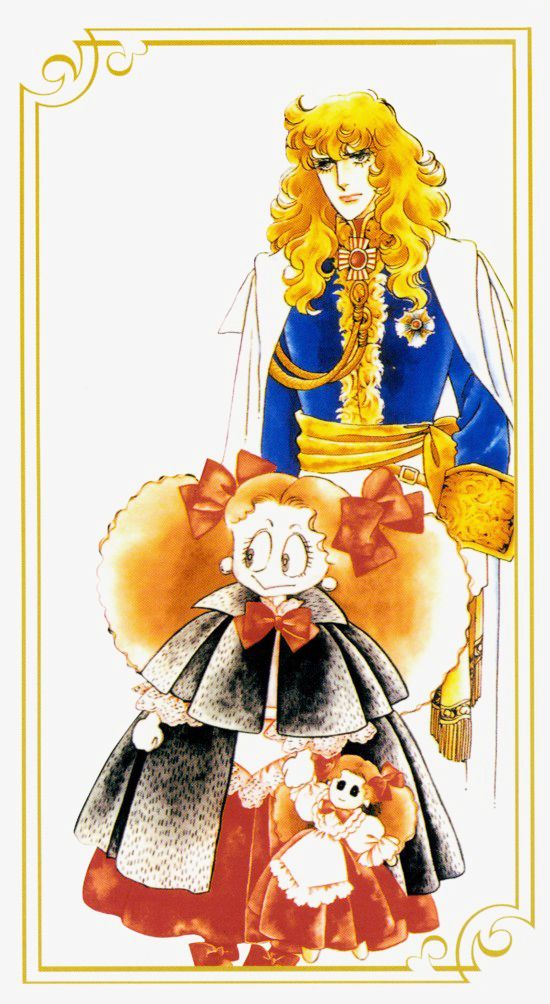
You can get the whole series in a beautiful omnibus collection. There are five total, but technically, the main story is done after the fourth with a bonus short story in there. The fifth volume is also made up of side stories about Oscar and adventures with her niece, LouLou. I did read these, and they are comical and engaging little detective stories. LouLou is a scamp and very bright and resourceful for her age. Some of the other side characters get to show different sides of their personalities, like Oscar’s father stuttering around. They were refreshing and I enjoyed them all.

This manga deserves its title of revolutionary and a role model for other female prince characters to come, like Utena in the 90s phenomenon, “Revolutionary Girl Utena.” Her efforts crafting this story were rightly honored with numerous awards, including the Shogakukan Manga Award for Shojo in 1975 and the Comics Festival Award for Comic Books in 1976. The country of France awarded her its highest national honor, Ordre national de la Légion d’Honneur, for bringing cultural awareness of French history and its influence in this manga. Elegant, entertaining, enlightening, engaging, and earnest historical fiction romance/political work truly is sharp, bold, gorgeous, strong, and unforgettable like a rose dancing in the wind of a pegasus’ wings.

************
Anime Series:
In 1979, a forty-episode adaptation of the manga aired in Japan, and so sad for me and other English speakers, it has never been dubbed in English. *CRIES* Like the manga, it is known for its pastel tones and large sparkly eyes. Also, the intense reactions when a dramatic event happened, such as freeze frames and the characters covering their face in gasps for the court revelations and scandals. And if you thought the manga description was dramatic, this is over the top! It could be a little jarring and comical at times, but after a while, I was enjoying it. It really gave the anime a sense of what it was.
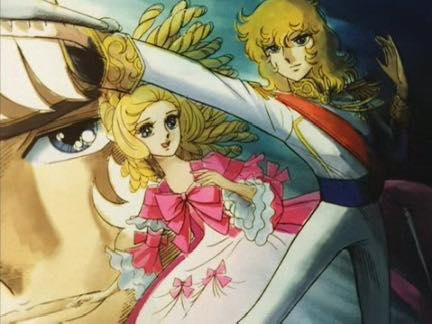
The directorial decisions also play a factor in the animes remembrance. From episode 19 to the end of the series, Osamu Dezaki took on the role of Director. This gentleman is such an influence on animation! He started as an animator and Director for THE ‘Astro Boy!’ Some others are ‘Space Cobra,’ five ‘Lupin III’ movies, four ‘Hamtaro’ movies for the early 2000s, and the beloved ‘Air’ and ‘Clannad’ movies. He was even a joint Director with Frosty the Snowman, the classic Christmas special, and the pinnacle of 80s, adorable cartoons, and Rainbow Brite! Mr. Dezaki worked until two years before his passing from lung cancer in 2011, having almost 50 years of work in the industry, and definitely making his mark!
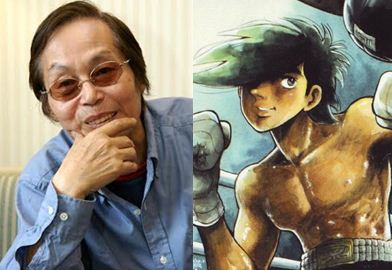
He also co-founded Madhouse Animation Studios! You know, a company that made some animes you may have heard of:
- YuYu Hakusho,
- Trigun,
- Sakura Wars (2000,)
- Galaxy Angel,
- X (By CLAMP,)
- Chobits (By CLAMP,)
- Di Gi Charat,
- Nana,
- Death Note,
- Chii’s Sweet Home,
- Kobato (by CLAMP,)
- Marvel anime,
- Highschool of the Dead,
- Hunter x Hunter,
- Chihayafuru,
- The Irregular Magic High School,
- Death Parade,
- My Love Story,
- Overlord,
- One Punch Man,
- Frieran: Beyond Journey’s End.
AND: MY FAVORITE, ‘Cardcaptor Sakura’ and its sequel!!!

What a man!
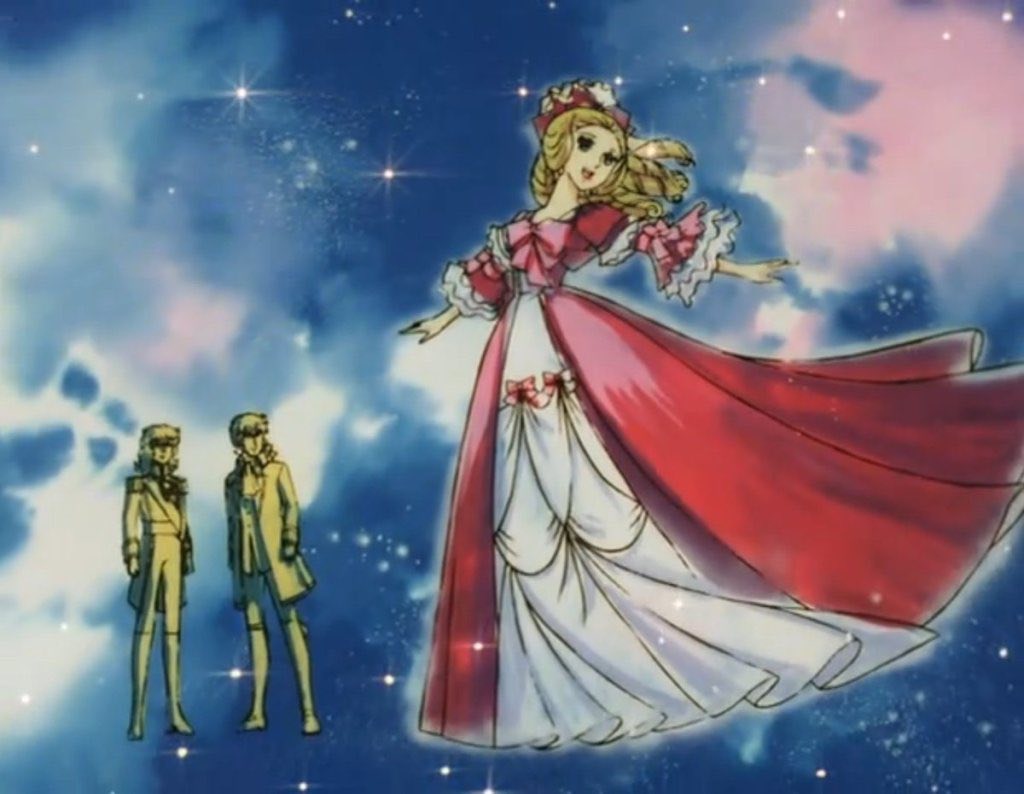
So, what’s he known for in the animation world? My favorite is the gorgeous postcard memories, where the screen fades into a similar image to the last still image, but as a detailed painting. There are split screens, stark lighting, and a Dutch angle; the camera is set and an angle so the shot then becomes embedded with vertical lines, not parallel to the bottom of the frame. This last technique is often used for tension. Animes are so ingrained with these that they become the norm. And we have this director and animator to thank for that, and of course, the “Rose of Versailles” is an excellent example of his ingenuity and passion, changing animation that has influenced dozens of creators.

Can’t forget anime bubbles and sparkles too! Yeay!
Of course, the anime, story-wise, has details between the anime and the manga, although the main arcs from the first half of the series follow it nicely.
Differences I wanted to share (without giving away any real spoilers:)
- We meet Marie as she is being transferred to her homeland, Austria, to her new home in France in episode two at the age of 14.
- Oscar stops Duke Orleans, the cousin of the King, from murdering the princess before she gets to Austria, but Oscar stops them.
- The Duke also tries to attack the prince later!
- Oscar and Duke de Guéménée do actually plan a duel in this one instead of having the Queen force them to cool down after they shout at a dinner and threaten to.
- Fersen and Marie share a reunion hug in front of the opera house instead of an isolated forest area.
- Nicole D’Oliva, the Marie Anottiete look-alike, is blind in this version, and there are no records in real life that she was.
- How Andre is badly injured is different, and Oscar finds out about it earlier than in the manga.
- The suitor party for Oscar is thrown by the man who wants to marry her, not her father, like in the manga.
- Oscar dueling with her father is a new addition.
- The physically intimate moment in the book is in a forest instead.
- The final battle is partly different too (but still boldly dramatic and immortalizing)
- Alain, Roselie, and her husband have a bittersweet extra scene,
- The Queen gives Rosealie a white rose for Oscar instead of her hair ribbon.
- There are also extra action scenes added because they wanted to get more males to watch the show as well.
This website was helpful ^_^ (Althougn the English is a bit broken:)
https://thethornsoftheroses.wordpress.com/episodes-synopsis/

This work has captured so many people. I think the description of poetry in motion is most fitting. With its pretty soundtrack (the theme song is hauntingly mesmerizing in the best way to this day), explored almost to mastery level themes, animation that has helped define shojo to this day, and a fair attempt of loyalty to the manga, it definitely deserves this title and praise that has lasted over 50 years.

Now, you must be prepared that it is a historical fiction. So, for history buffs, if you want an accurate representation, it is fair, just like the manga is, but it won’t be complete. It is also a political and social class drama, so for those expecting a lot of hardcore fighting and action, well, it does have more than the manga. Overall, it can still be considered slow for those who are not prepared or fans of the genre.

But the deep complexity of the characters has put them on a pedestal of greatness for decades, and they are still on there to this day. I highly recommend this anime for anyone interested in historical fiction, social class drama with raw love stories, powerful self-discoveries, and alluring characters not afraid to go against society for their strengths or to show their faults to grow.
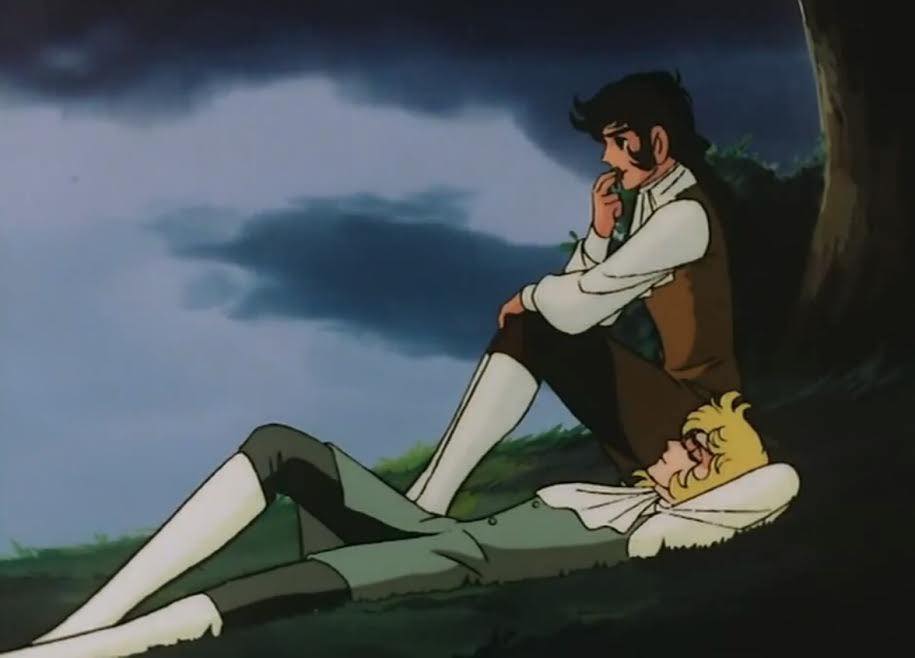
You can get the “Rose of Versailles” on Blu-ray, although it is through independent sellers so far on Amazon. Amazon Prime says they have it, but the first five episodes are unavailable. And the subtitles, because Japanese only, are very finicky. Boo!

************
*************
Lady Oscar Live-Action Movie:
You can watch it for FREE on YouTube HERE:
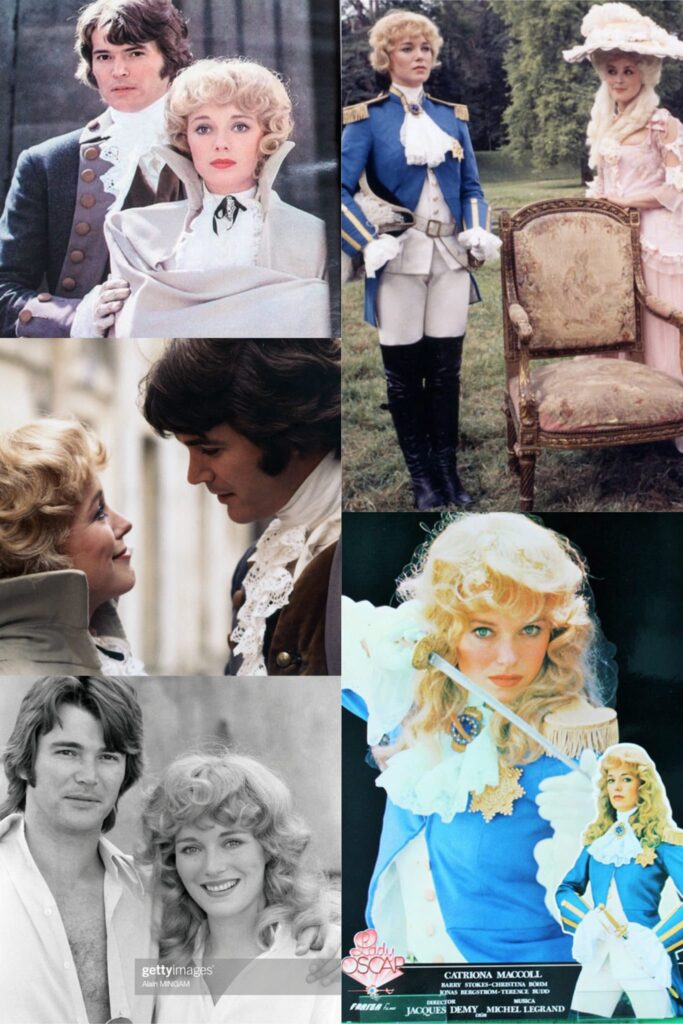
“A live-action adaptation of a beloved manga and anime from the 70s during that same decade. Set on location of the historical tale, France, including the actual Place of Versailles itself! With French actors in costumes like the anime has come to life. But they all speak English! A Japanese-French production, the entire film spoken in English?!
People, this is a gift from the otaku gods!
And it is sadly a gem that has been concealed due to the cruelty of the master, forgotten time. But now, thanks to YouTube and my brother, I can share this rediscovered treasure with all of you.
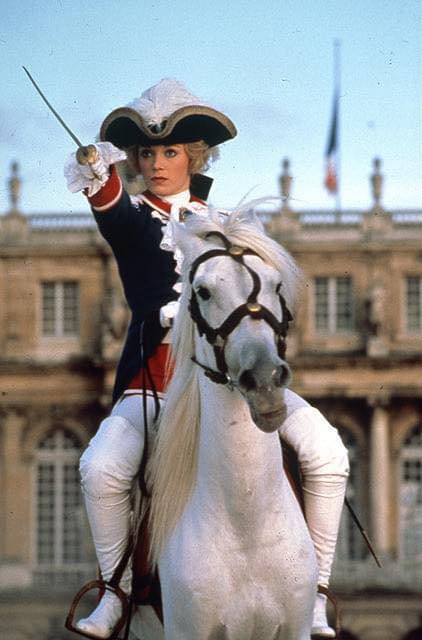
This two-hour movie takes the source material and executes it epically overall, which is a challenge given that there are 80+ chapters/40 episodes to condense. Obviously, not everything is flushed out as much as fans would want, but the pacing was well-done, it hit all the key points, had the perfect balance of wit and humor…and tons of heart. And it drew my bro-bro and me in from start to finish.
The cast they got did an amazing job! Especially our lead, Catriona MacColl. She really looked like the character, embodied our revolutionary Lady Oscar flawlessly, with a real golden light and presence. And she is drop-dead gorgeous, no matter whether being feminine or the BA warrior she is. And man, she can fight and has guts! Kissing a girl, while dressed like a dashing man, to get her controlling, jerk father off her back on a forced engagement!
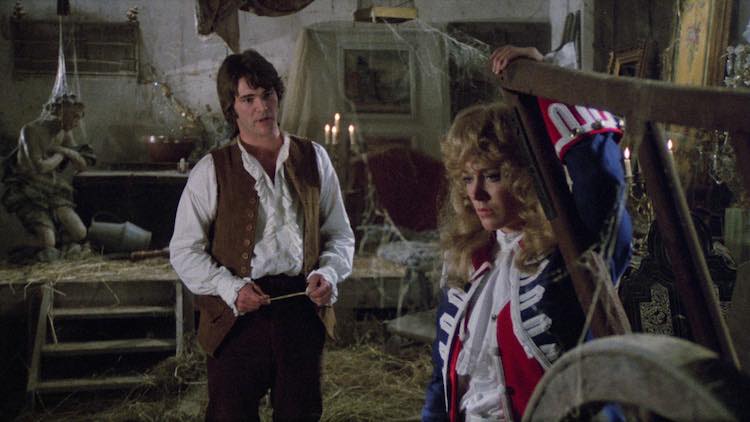
The other actors follow their inspirations well. They even made Oscar’s forced on her fiancé at a time way more despicable, which I thought was a nice touch because even though I liked the character in the manga and animes, it was hard for me to root against him, which I was supposed to do as a watcher and reader, in those adaptations. Easy to dislike him here!
It was a treat to see many of the plot points: the stolen necklace, the fake baroness (although they built her side arc up then rushed the ending), Oscar’s struggle commanding
her new army, the beautiful ball scene, seeing the Queen’s children over time, and more. The introduction followed the manga as well, Oscar being the youngest of six daughters, and her father was tired of waiting for an heir. However, we aren’t sure if the mother died in childbirth, but we never see her. Oscar’s mother is alive in the manga and animations.
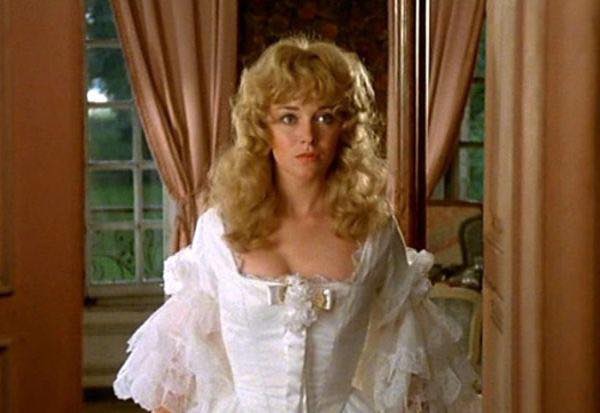
We were bummed to hear that some viewers did not like Miss MacColl’s performance, saying she was too pretty to be our inspirational lady. She was indeed stunning. They did add lipstick compared to her counterpart, but her acting was astounding, and I felt the heart of the character, the man and woman, through the screen. They also said her outfit was too cosplay…it’s a PERIOD piece! Based on an ANIMATED character! I would rather have that than a muddled-down version we see in live-action adaptations now.
The only glaring issue we had was the ending. The big storming up for the revolution, Oscar is having a life-changing event and mindset. Of course…things become tragic, but it lies flat, not having the emotional impact it deserves, and was open-ended. A useless tragedy as they walk amongst the crowd, not really fighting for what is right, that makes the conclusion of the manga and shows soooo explosive, powerful, and emotional. It was dull and sad because these characters are such role models, and this was not their destiny.
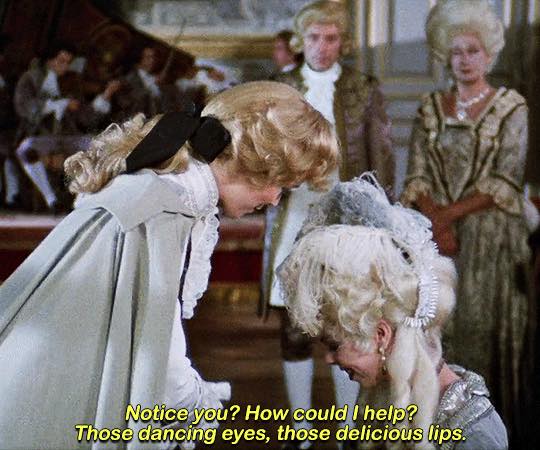
But to review, I cannot gush over this movie enough! It was a delight and a pretty piece of history!”
************
2025 film (Netflix:)
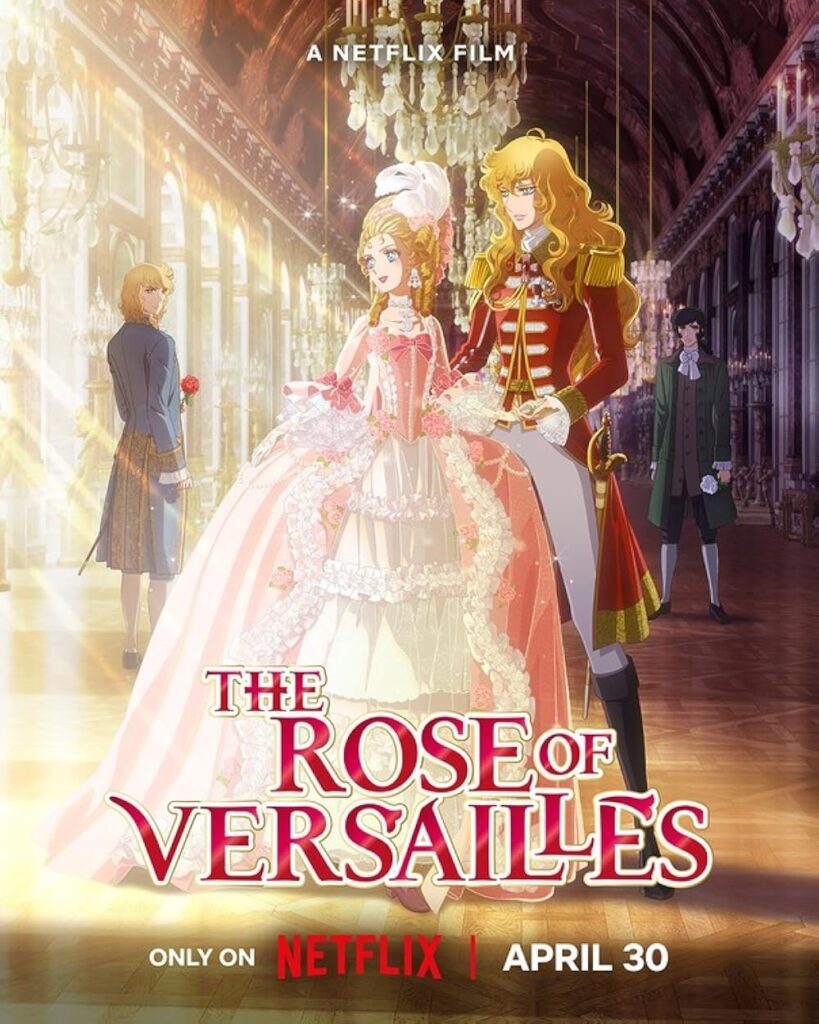
“I was so excited when this project was announced last year! Finally, this property has not received a new anime form adaptation in nearly 50 years, and it should get one! Plus, my girl Caitlin Glass plays our Lady Oscar. Miles and I were ready to set sail for this next-generation take on the story.
And our wind was either let out or sent us zigging in too many directions.
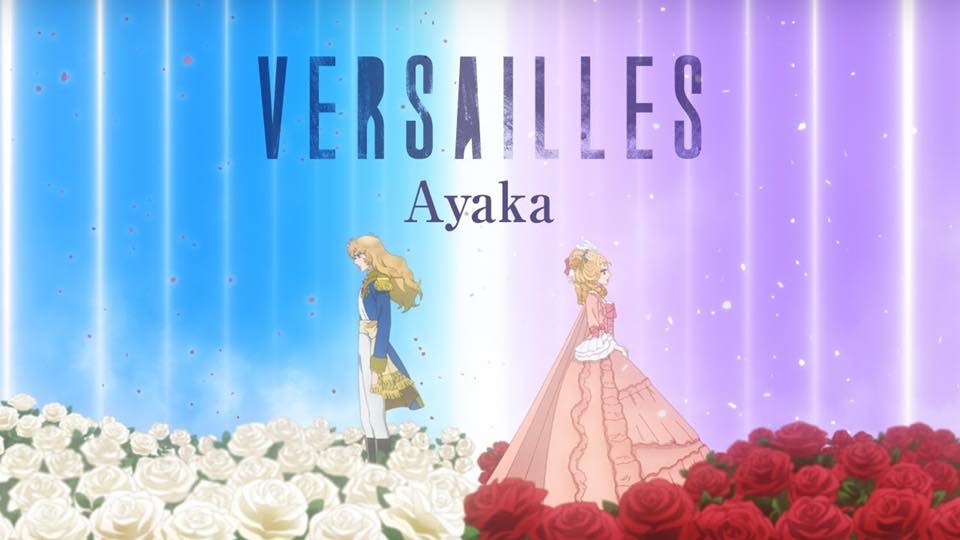
First off, this is a musical. I mean a heavy musical, which no one I know was expecting. Although this series has been known for its incredible stage musicals since the 70s, and I love musicals, the songs felt more like music videos slapped in every few minutes; pretty, yet no substance, and taking away from the plot instead of enhancing it. The songs were all translated and sung well, which I appreciated, but again, it took you out of the story and did not add anything. For example, the ballroom scene where Oscar dresses as a lady for the first time is legendary, stunning, and critical to her tale. It was reduced to a five-second clip added to a generic song about discovering yourself in a music video format! GRRR! Disrespectful! Unforgivable! Still enraged by this!
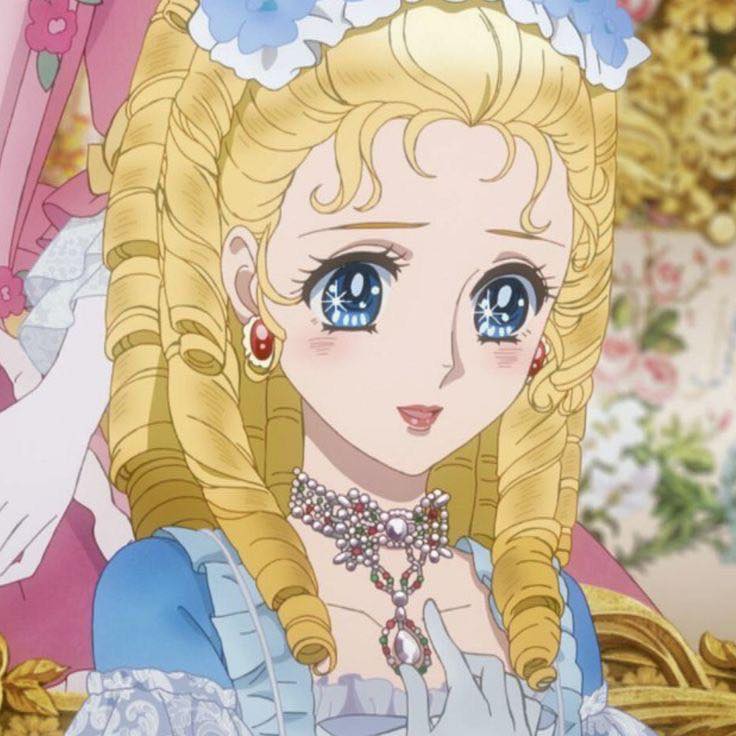
For the animation of the movie, it was lovely as a whole, very colorful, but again, sometimes it felt it was just there for fluff instead of enhancement. It did include those legendary over-sparkly eyes too, which, as an avid fan, I was happy to see, but I know it shocked and distracted others, for it was a lot, lol! Cannot blame anyone for thinking that.
This production had disappointing aspects, too. More than it should. They made the characters too emotional. There are heartpounding, heartbreaking, heart-healing scenes, but everyone was crying. I mean, crying over everything. And Oscar was meant to be tough; her first time allowing herself to cry meaningfully, but it felt wasted here. Just dramatic instead of random, too sappy pop songs shoved in.
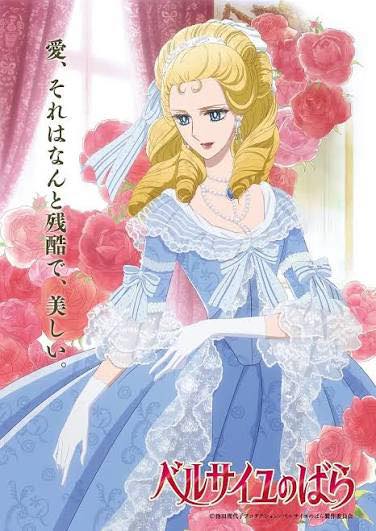
And Andre…more poor boy Andre…I love the voice actor for him, but this script did him dirty, making him puny, meek, and obsessed with her suddenly, taking the strength he gave Oscar away. It made me sad. Now, Andre did start this way in the manga, but his growth became natural and beautiful, along with their feelings, once they realized it. His soft, quiet strength becomes a companion to Oscar, instead of the crutch, suddenly, which is why the manga couple is so cherished. I understand the manga has dozens of chapters, so adding every possible development is impossible, but I would have toned down his crybaby nature a little in the start, like the OG anime, so the growth wasn’t so far for the poor lad to reach, and it would make him a more likable character from the start. Because he sure deserves that.
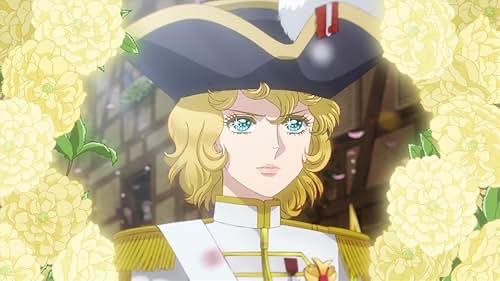
My brain was glued and fried at once, trying to connect this movie together. I mean, the last forty minutes, one-third of the movie, felt like a totally different film with the final battle and no musical numbers. Then the fate of the king, queen, and the passion leading up to the French Revolution was downgraded to old-timey appearing illustrations with subtitles at the bottom…DURING the credits! Again, sparing five minutes to animate the key points and gist of this would not have upset your audience. This felt lazy and crude to me.

I did go back and rewatch it one evening in the background of school work as I worked after I read the manga. It did follow the main arc with Marie becoming a French royal, her forbidden romance, and Oscar’s revelation on who she is and what she loves and fights for really closely. The film starts at the time Marie entered Paris and saw the young general and her personal guard, Oscar, on a white horse, for the first time. So, I will give them an extra nod of respect for this. Although I do miss our beloved important spring breeze, Roselie, who only makes a cameo in the movie, along with other characters and plots like Madame Barry being shunned, a necklace scam, Marie’s scammer friend, and the Black Knight phantom thief.
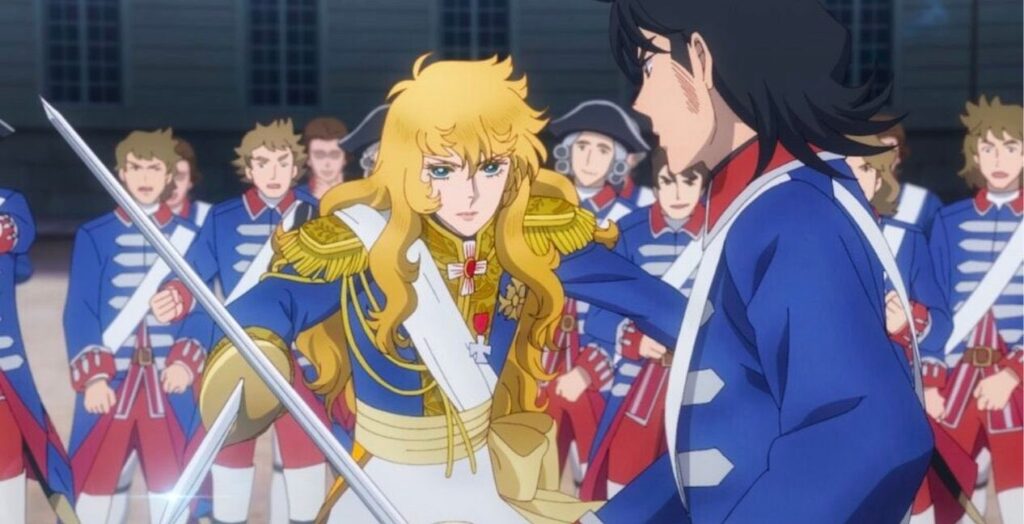
This time, however, when I watched the film, I felt…nothing. The first time, I was overwhelmed, like Versailles at the time itself; so much grandeur, but hardly any governmental substance for all, which became the downfall. I went from processing it to getting bored, even during songs. Which makes me sad. All I wanted was the manga.
It is a pretty movie and I do recommend it if you cannot get access to a translated manga copy or do not like subtitles for the original anime staple, but as an avid fan, think of it as a fan letter, not an adaptation or canon material.”
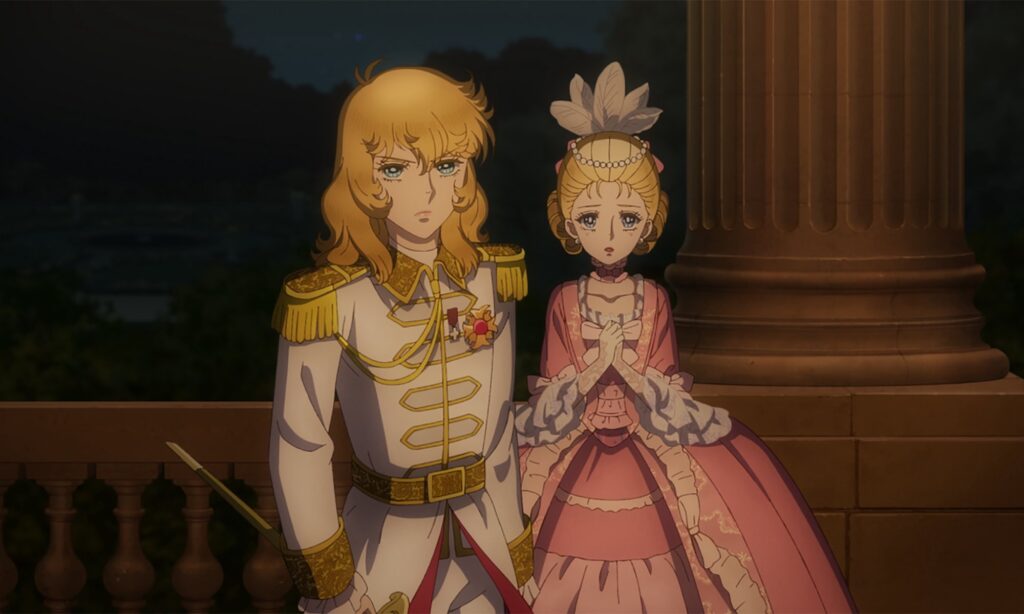
************

Oscar’s first anime appearance was in an episode of the classic “Lupin III.” The plot of hers is very different, but she and Andre are featured, and you get to see a lot of her combat skills and uniform. But it’s like a supernatural type episode. You can watch it on Crunchyroll, but it is not dubbed.
************
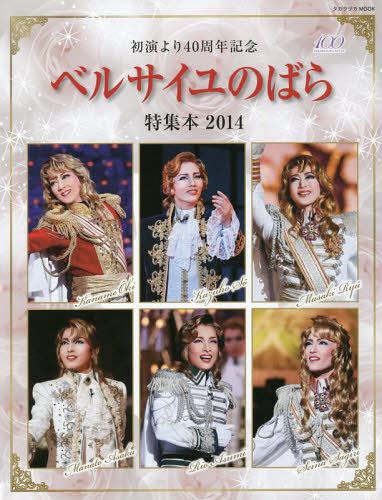
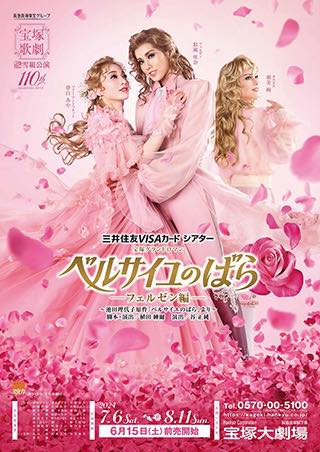
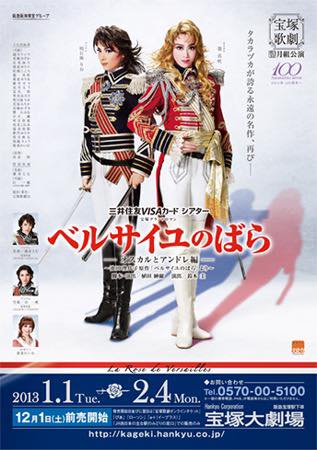
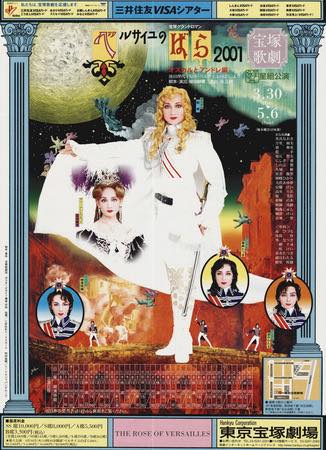
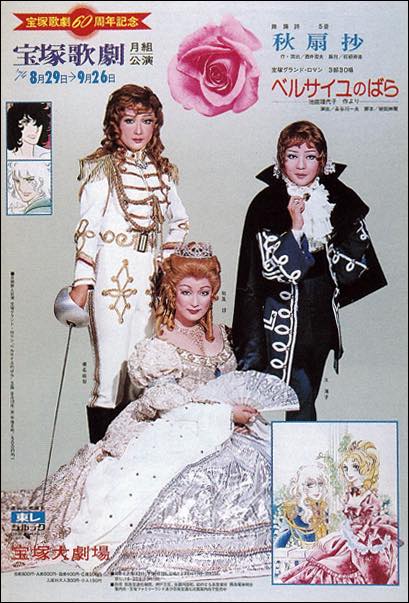
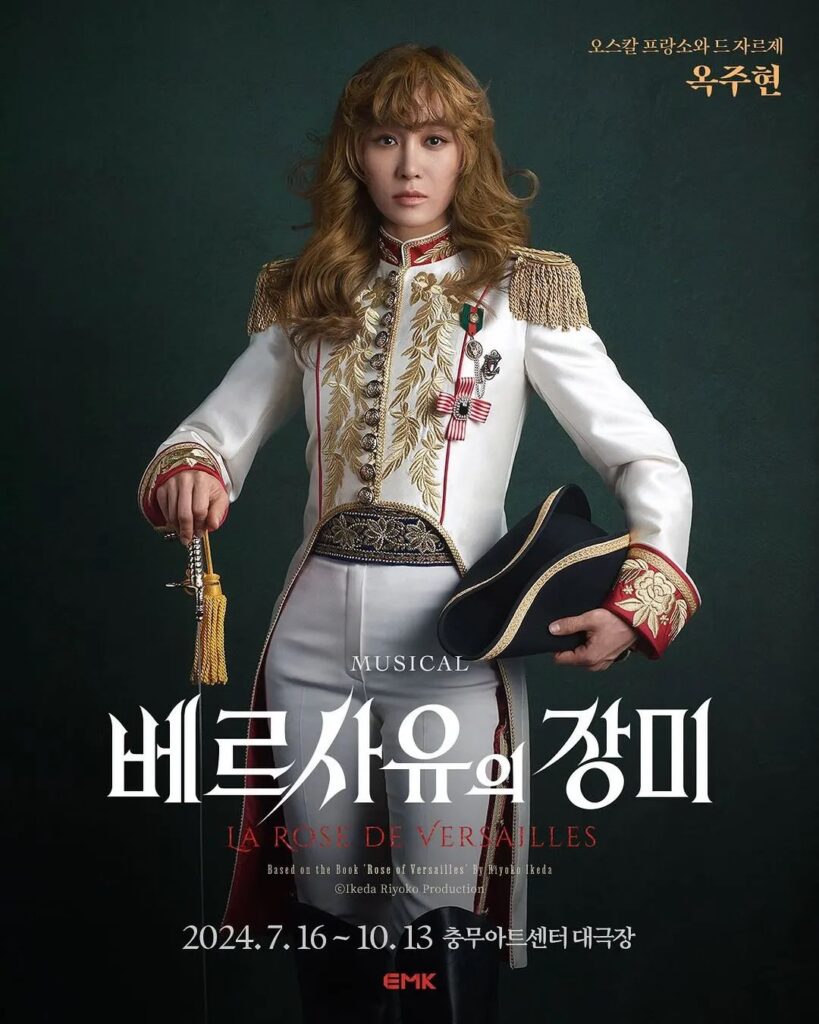
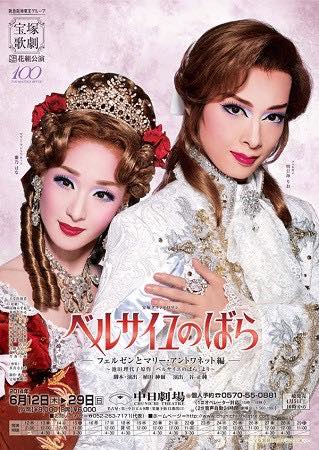
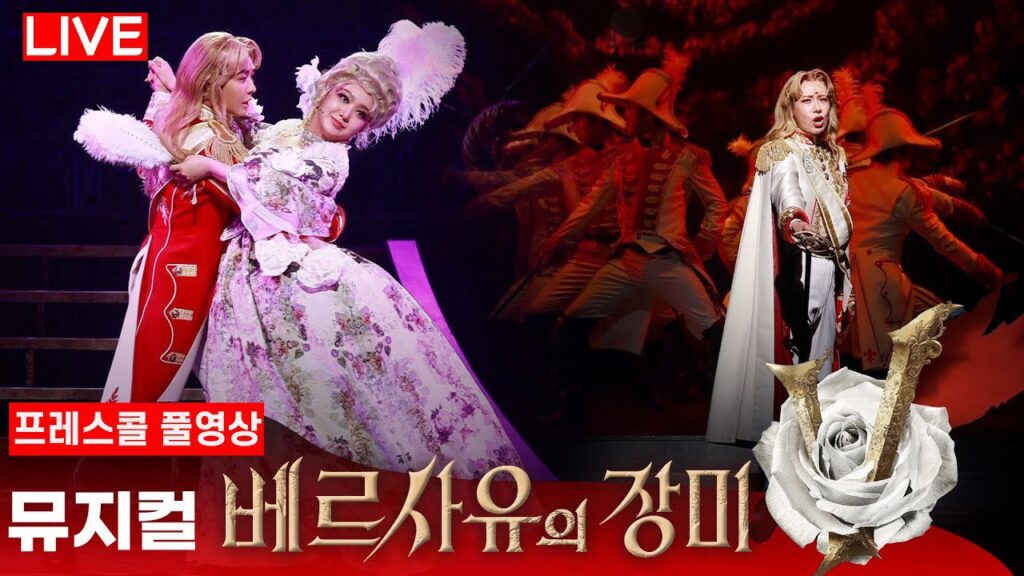
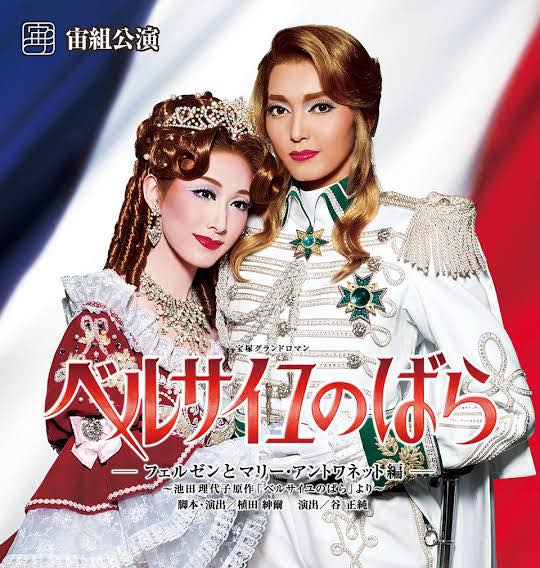
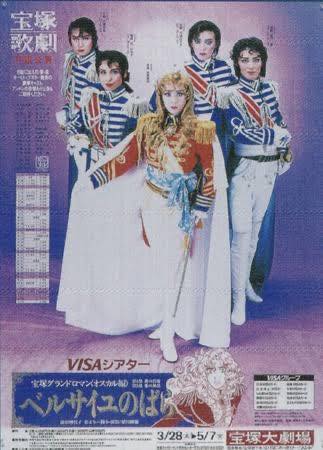
This story has also had 25 musicals on stage since 1974, the last current show being last year! Korea also had a tour in 2022-2024. Several of the shows were written by the mangaKa herself, and a decent amount of them take some of the minor characters and put them as the front-runner stars. Many others also add more scenes between the two couples or make them the focus. They are all beloved. In fact, so much so that the Takarazuka Grand Theater, known for its all-female casts in shows since 1913, has a golden statue of Oscar and Andre outside it! This theater’s stage is known for rotating stages and hydraulics in its current setting, as the theater itself is like a department store with restaurants, cafés, and little stores. Marie Antoinette would be proud! Many actresses dream of playing Oscar onstage, considering her a top star role.

You can learn more about this covenant star system for stage place right here: https://rov-regular.livejournal.com/886.html?
HERE ARE SOME POSTERS AND SHOTS FROM THE NUMEROUS SHOWS BELOW!





************
“A rose born in destiny, coming from nobility, burning beautifully, passionately.” I think the anime opening sums up my passion and the core of The Rose of Versailles.”
************